
What Is a Sales Funnel? A Beginner-Friendly Explanation
A plain-language breakdown of how simple marketing funnels actually work.
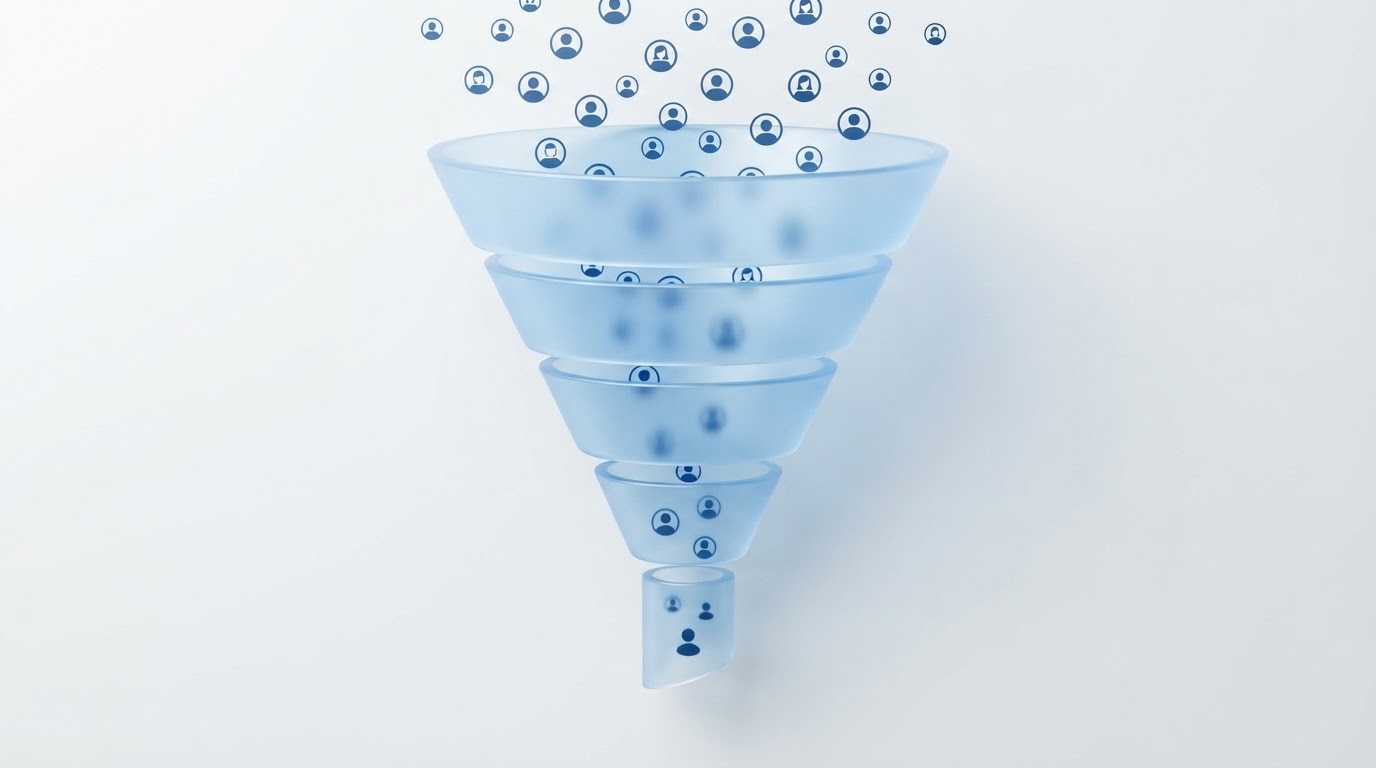
“Sales funnel” sounds like marketing jargon, but the idea behind it is simple and familiar. A funnel is just the path someone takes from first hearing about you to eventually deciding to buy (or join, or sign up). That's it. Let's break it down without the buzzwords.
The Core Idea
Imagine a wide group of people at the top. Not all of them will be interested, and not all of those who are interested will buy. The funnel narrows at each step as people decide whether to keep going.
The four basic stages
- 1.Awareness — Someone discovers you exist.
- 2.Interest — They want to learn more.
- 3.Decision — They consider whether to take action.
- 4.Action — They buy, join, or sign up.
A Real-World Example
Say you write a short free guide about a topic you know well. You share it in a community. People download it (awareness). Some read it and find it helpful (interest). A few reach out or follow your updates (decision). One eventually pays for a deeper resource or your help (action). That entire journey is your funnel.
A funnel isn't a trick. It's just a way of guiding the right people, step by step, toward something that genuinely helps them.
Why It Matters for You
You don't need a complicated funnel to start. You need a clear first step (something free and useful), a way for interested people to learn more, and a simple offer for those ready to go further. Most beginners overthink this. Start with one helpful thing and let the path reveal itself.
The Beginner's Version
- Share one useful piece of content where your audience already is.
- Invite people to get more by joining a list or community.
- Offer a simple, low-cost way to go deeper when they're ready.
That's a real funnel—simple, honest, and effective. As you grow, you can refine each step. But the foundation is just: be helpful, stay visible, and make the next step obvious.
Sketch Your First Simple Sales Funnel
Let's walk through a simple hypothetical example so the idea feels concrete. Imagine someone encountering your work for the first time.
- 1.ATTRACT — Someone discovers a helpful YouTube video, blog article, or social media post you created.
- 2.CAPTURE INTEREST — They visit a simple landing page and request a free guide or assessment you offer.
- 3.NEXT STEP — They receive helpful follow-up information and are introduced to a relevant product, service, or community.
Here's a useful distinction: a website offers many opportunities to explore, while a funnel guides someone through a specific journey toward a desired action. A website is a place; a funnel is a path. Grab a pen and paper and sketch your own three-step funnel—what would attract someone, how would you capture their interest, and what next step would you offer them? You don't need it perfect. You just need it started.
Ready to discover your next income move?
Explore opportunities based on the skills and experience you already have.
Take the Free AssessmentFree to take · Beginner-friendly · No business experience required
Keep learning with the free MWK community
Connect with other experienced adults exploring AI, freelancing, and new income opportunities together.
Join the Free Community